



Top Social Procurement Trends in Australia
The CEO Playbook for Talent: Great People Stay Where the Team Is Strong Across The CEO Institute’s Talent Series, delivered in association with...
6 min read
.png?width=1200&height=627&name=The%20CEO%20Playbook%20for%20Talent%20v2%20(1).png)
The CEO Playbook for Talent: Great People Stay Where the Team Is Strong
Across The CEO Institute’s Talent Series, delivered in association with Leading Teams, one theme kept returning with real force: talent is no longer a narrow recruitment issue. It has become one of the clearest tests of CEO leadership.
The mistake many organisations make is assuming people leave roles. More often, they leave teams. They leave inconsistent standards, unresolved behaviour, weak accountability and environments where the public promise of the organisation does not match the private experience of working inside it.
Every CEO understands the external pressure. Skills shortages remain real. Employee expectations have shifted. Hybrid work has changed the psychological contract between employer and employee. Younger generations are asking more direct questions about meaning, flexibility, progression and leadership. Experienced talent is more mobile, more discerning and less willing to tolerate environments that drain more than they develop.
In response, many organisations have strengthened the visible architecture of talent attraction. They have reviewed remuneration, improved flexibility, refined benefits, refreshed onboarding, strengthened employer branding and built more formal development pathways. These actions matter. They are part of the competitive reality of attracting and retaining good people.
But they are not the whole answer.
The more revealing question for CEOs is this: what kind of team are we asking great people to join?
That question should sit at the centre of every serious talent strategy. People may join an organisation because of the role, the brand, the remuneration or the opportunity, but they experience the business through their team. They experience the quality of the relationships around them. They experience whether feedback is useful or avoided, whether accountability is fair or selective, whether difficult behaviour is addressed or quietly tolerated.
This is where the work of Ray McLean and Leading Teams offers such a valuable lens. Team work is often treated as a soft idea, wrapped in language about collaboration, trust and alignment. In practice, it is far more demanding. Strong teams are built through honesty, accountability and a clear standard of behaviour that people are expected to uphold, especially when pressure rises.
A group of capable people does not automatically become a high-performing team. Talent alone does not create trust. Seniority does not create honesty. Experience does not create accountability. These things have to be built deliberately, practised consistently and protected by leaders who are willing to address what others avoid.
That is why the talent market often exposes what the culture has already been tolerating.
When strong people leave, organisations usually examine the obvious explanations first. Was the salary competitive? Was the role big enough? Was the career pathway clear? Was flexibility sufficient? These are valid questions, but they rarely tell the full story. A more uncomfortable question is often more useful: what did this person experience inside the team that made leaving feel like the better option?
The answer can be difficult to face. Good people may leave because decision-making was unclear. They may leave because poor behaviour was allowed to continue. They may leave because feedback was inconsistent, politics were exhausting or expectations shifted depending on who was in the room. They may leave because the organisation spoke about accountability, but applied it unevenly.
These issues rarely appear neatly in an exit interview. They accumulate quietly. A missed conversation. An unresolved tension. A leader who avoids the hard call. A high performer whose behaviour is excused because their results are strong. A team that learns over time that the stated values are less important than the unspoken rules.
That is how culture is formed. Through the repeated behaviours people observe, absorb and eventually accept.
For CEOs, this is both the challenge and the opportunity. The CEO cannot personally control every relationship, conversation or decision across the organisation. Nor should they try. But the CEO can set the conditions in which those relationships, conversations and decisions take place. They can make it clear that the standard matters. They can model the behaviour expected of others. They can ensure the executive team operates in a way the broader organisation can trust.
The executive team is particularly important because it becomes the cultural reference point for everyone else. If the executive team avoids honest conversations, the organisation learns avoidance. If the executive team tolerates inconsistency, the organisation learns ambiguity. If the executive team says one thing publicly and behaves differently privately, the organisation learns that values are negotiable.
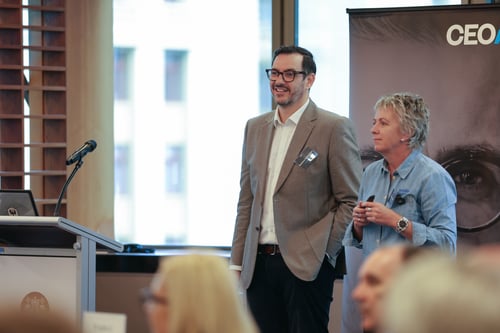 People watch the top team closely. They notice what is rewarded, what is challenged and what is allowed to continue.
That is why honesty is such a powerful performance discipline. In many workplaces, honesty is treated as a personal virtue. In strong teams, it becomes part of the operating system.
Honesty does not mean bluntness. It does not give leaders permission to say whatever they think under the banner of being direct. Poorly handled honesty can damage trust as quickly as silence can. The honesty that improves performance is specific, respectful and anchored in a shared commitment to the team’s purpose.
It allows a team to ask what is really getting in the way. It allows a leader to say, “We have accepted a standard here that we would not accept elsewhere.” It allows people to challenge behaviour without turning the conversation into a personal attack.
These conversations are rarely easy, but they often determine whether a team matures or simply keeps functioning around its dysfunction.
The cost of avoiding honesty is rarely immediate, which is why businesses tolerate it for so long. The damage shows up later in slower execution, weaker trust, duplicated effort, unresolved resentment and the quiet loss of discretionary effort. People continue attending meetings. They continue doing the work. They may remain polite and professional. Underneath that surface, energy is being spent on interpretation, self-protection and frustration.
A CEO may look at a calm leadership team and assume alignment. Sometimes calm does mean alignment. Sometimes it means people have stopped saying what needs to be said.
Accountability is the companion discipline. If honesty allows a team to see the truth, accountability determines whether anything changes because of it.
In too many organisations, accountability appears only after something has gone wrong. Someone misses a target, behaves poorly or fails to deliver, and accountability arrives as a corrective mechanism. That is too late and too limited. In strong teams, accountability starts much earlier. It begins when the team defines what it expects of itself.
What behaviours will we protect? What standards will we hold? How do we challenge each other? How do we disagree well? What will we do when someone delivers the result but damages the team in the process?
These are intensely practical questions. They shape how decisions are made, how conflict is handled, how meetings function, how leaders give feedback and how people interpret fairness.
The best people care deeply about fairness. They do not expect every decision to go their way, but they do expect consistency. They want to know that accountability applies across hierarchy, tenure and commercial importance. They want to know that the organisation will not protect poor behaviour simply because someone is hard to replace.
This is one of the most direct links between culture and retention. Good people are not frightened by high standards. Many are drawn to them. What they resist is inconsistency. They resist environments where standards are spoken about but not defended. They resist teams where accountability depends on personality, politics or convenience.
A strong talent playbook therefore begins well before recruitment. It begins with the behavioural standard inside the organisation.
Values are useful when they are translated into observable behaviour. Respect needs to mean something in a meeting. Accountability needs to mean something when commitments are missed. Trust needs to mean something when feedback is required. Without that clarity, people interpret values through their own preferences, pressures and habits.
The CEO’s role is to reduce that ambiguity.
That means building feedback into the rhythm of work before there is a crisis. Feedback that only appears in moments of failure will always carry emotional weight. People brace for it. Managers delay it. Teams treat it as exceptional rather than developmental. Strong teams make feedback normal, useful and connected to improvement while improvement is still possible.
It also means recruiting for contribution, not competence alone. Technical capability matters, but capability without fit can be costly. The question is not only whether someone is talented. The question is whether their presence will strengthen or weaken the team system. Will they build trust? Will they take responsibility? Will they handle feedback well? Will they lift the standard around them?
CEOs also need leaders who can hold the line. Many managers are promoted because they are technically strong, commercially successful or reliable under pressure. Those qualities matter, but they do not automatically equip someone to lead human complexity. The hardest part of leadership is often not knowing what should be done. It is having the courage, timing and language to do it well.
Avoidance can feel kind in the moment and become expensive over time.
The organisations that stand out in the next phase of the talent market will still need competitive employment propositions. They will still need to pay fairly, offer flexibility where possible, develop career pathways and communicate purpose clearly. Those elements remain important.
But the real differentiator will be the internal experience. People will stay where the standards are real. Where honesty is expected, not punished. Where accountability is shared, not weaponised. Where leaders have the skill and courage to address what others avoid. Where talented people do not have to lower their expectations in order to survive the culture.
For CEOs, that is the real playbook.
Talent attraction begins with the reputation of the team and the leadership culture behind it. Talent development happens in the daily conversations that shape behaviour. Talent retention is earned through the consistency between what the organisation says it values and what it actually protects.
The best people are choosing the environment in which they will invest their energy, judgement and ambition.
They are choosing the team.
They are choosing the standard.
The strongest talent strategy a CEO can build is a better standard inside the team.
The CEO Playbook for Talent: Great People Stay Where the Team Is Strong Across The CEO Institute’s Talent Series, delivered in association with...
There is a particular kind of pressure that builds inside senior leadership teams. It is not always dramatic. It does not always arrive as a crisis.

How CEOs are redesigning work, decision-making and capability for the next era of performance. For many CEOs, productivity has moved from an economic...