


“Work” is the only major corporate investment most boards do not govern
Australia is not short of demand. It is short of the productive capacity needed to meet that demand without creating higher prices.
4 min read
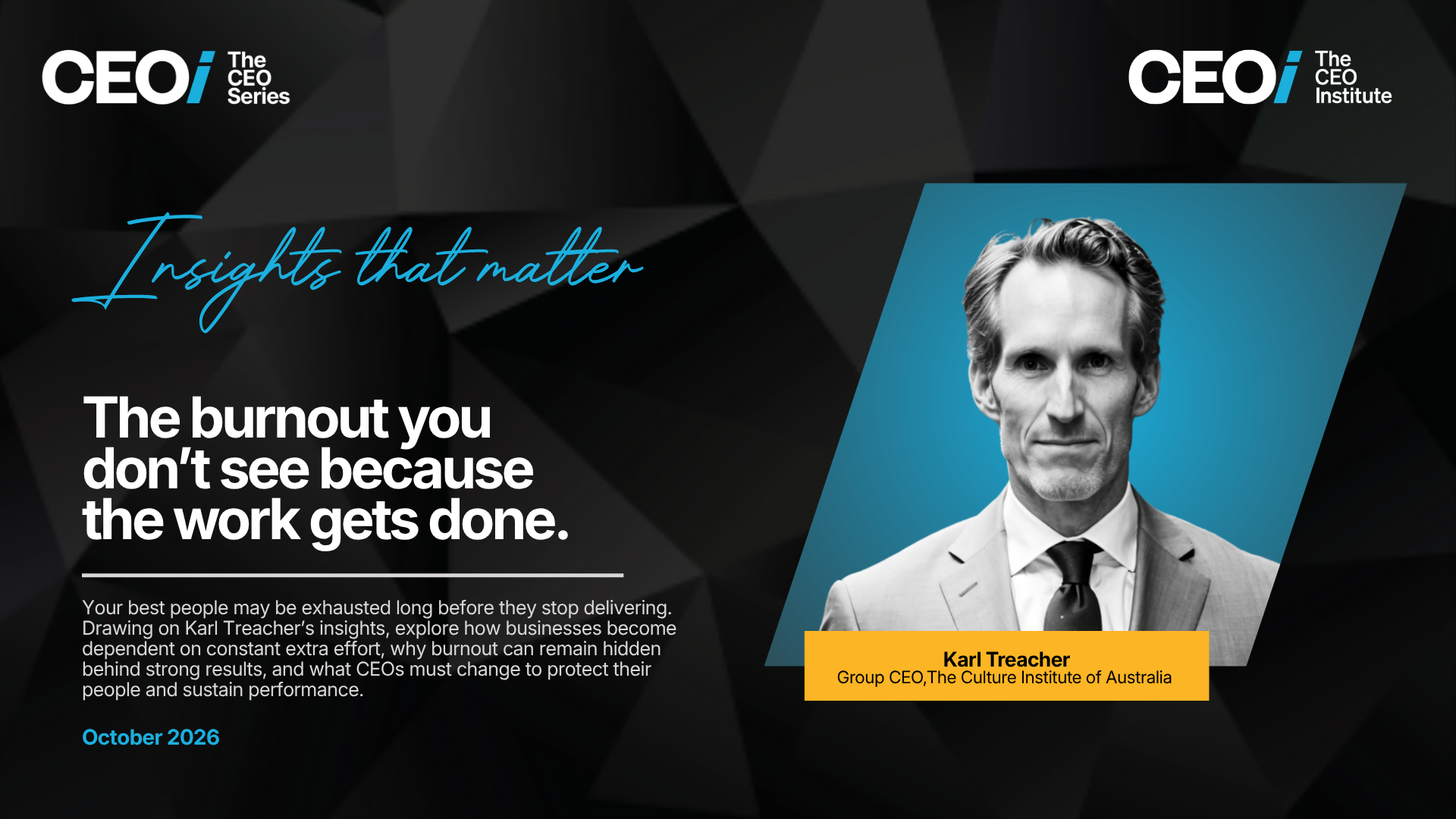
The burnout you don’t see because the work gets done
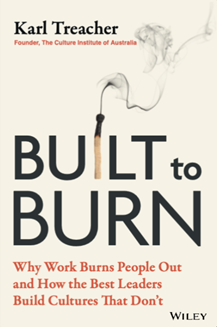
In collaboration with Karl Treacher, founder of The Culture Institute of Australia and author of Built to Burn.
The person you are most worried about losing may also be the person you keep asking to do more.
They take on the difficult client, cover the vacancy and stay back to finish what the rest of the team couldn’t get to. There is relief in having someone like that. You thank them, acknowledge that it has been a demanding few months, and promise things will ease after this quarter. You mean it.
Then another quarter arrives. The vacancy remains unfilled, a new project gets approved, and the same person finds a way through. Because the work gets done, the business learns that the arrangement works. Future commitments are made on that basis. Gradually, someone’s willingness to stretch becomes an assumption built into the plan.
This is where Karl Treacher’s argument about burnout becomes particularly uncomfortable for leaders. An organisation can become dependent on behaviour that is exhausting its best people. Their commitment helps conceal the problem. By the time they stop coping, the business may have spent years treating their extra effort as ordinary capacity. Being indispensable can feel rewarding. A conscientious person may take pride in being the one who can always be relied on, while a grateful leader sees growing responsibility as recognition. There can be affection and mutual respect in that relationship. Both have reasons to avoid examining what it is becoming.
Karl admits he once gave individual weakness too much weight. Researching “Built to Burn” forced him to reconsider beliefs he had carried into his own consulting work. There is something useful in that admission for anyone who has privately wondered why a colleague seems less able to cope than they used to. The World Health Organisation locates burnout in chronic workplace stress that has not been successfully managed. That directs attention towards the conditions people have been working under, including conditions their leaders have come to accept.
Massey University’s April 2024 research placed 57% of surveyed New Zealand employees in a high burnout risk category. In Australia, Safe Work Australia a reported median time loss of 35.7 working weeks for serious mental health claims in 2022–23. That Australian measure covers mental health conditions broadly. It is a long time for someone to be trying to find their way back to work.
Long before an absence appears in the figures, someone may still be turning up, completing the essentials and quietly losing any enjoyment in what they do. A leader sees dependable delivery. The person producing it knows how much more effort an ordinary day now requires.
Karl calls the setting in which this happens the “accidental workplace”. It accumulates around people. Another reporting requirement, another standing meeting, another channel to monitor. Each addition has a sponsor and a reason. The combined demand rarely receives the same scrutiny, particularly when capable people keep absorbing it without complaint.
Our instincts can compound the problem. In eight experiments published in Nature in 2021, researchers found that people systematically overlooked opportunities to improve something by removing parts of it, especially under greater cognitive load. The finding offers an explanation for a familiar management habit: responding to overload by introducing another process to manage it. Even a wellbeing initiative can become another appointment in a week that already has no room.
This leaves CEOs with choices that deserve more honesty than they often receive. Revenue is under pressure. A customer matters. Hiring takes time and costs money. Asking a trusted person to carry a little more can feel like the most responsible decision available. Sometimes an exceptional effort is necessary. The trouble begins when every new demand qualifies as an exception and nobody can say when the effort will end.
Before accepting another commitment, the leadership team needs to agree what delivering it will displace. A project may have to wait. A service promise may need renegotiating. Someone may need to tell the board that the current timetable depends on sustained overtime. These choices have consequences. So does leaving employees to make the trade-off privately, usually with their evenings, their sleep or time with their families.
Karl defines culture as “the expectations that come with being part of this team or organisation”. A leader’s concern for people is tested in the expectations they uphold when delivery becomes difficult.
An employee can hear that wellbeing matters and still understand that the safest response to a new request is yes. They remember who was praised for rescuing the last deadline. They notice whether colleagues who set boundaries continue to receive interesting work. They may like their manager, trust their intentions and remain reluctant to admit they are struggling. Being valued for your reliability makes it harder to risk disappointing people.
That helps explain why a sincere invitation to speak up can produce reassuring answers. Karl’s advocacy of “stay interviews” creates an opportunity to get beneath those answers while someone is still working for you. Asking what keeps spilling into personal time, or what they have given up maintaining their output, makes the conversation more concrete. Some people will speak more freely to someone outside their reporting line.
What happens afterwards determines whether they will be honest again. If a manager listens sympathetically and leaves every deadline intact, the employee still has the same problem. A credible response involves changing a demand, resolving conflicting priorities or securing help, then checking whether working life has improved. Care becomes visible in the decisions that follow the conversation.
Karl recalls a coach who recognised that his enthusiasm could lead him to overtrain. Wanting to keep going was a reason to pay attention. In a workplace, a committed employee’s willingness to accept more tells a leader very little about whether they have room for it. High standards require judgement about effort, recovery and the conditions under which someone can keep doing good work. If an intense period genuinely cannot be avoided, agree its limits in advance, arrange cover and decide what recovery will follow. Leaving that until things quieten down makes it easy to postpone indefinitely.
CEOs need that judgement applied to themselves, too. A chair can express concern about a chief executive’s wellbeing while approving an agenda that leaves little room for it. The board should examine how many major commitments it has authorised, what can be delegated and which demands it is prepared to defer. The CEO who habitually absorbs everything may find it particularly difficult to initiate that conversation.
People should be able to care deeply about their work, achieve difficult things and enjoy being there. They should be able to go home with enough of themselves left for the people who matter to them. That is a reasonable ambition for a business, and leaders have a direct hand in making it possible.
Think again of the person you always count on. Before asking them to get you through another difficult quarter, ask yourself what you have changed since the last one.
To read Karl’s new book, Built to Burn – click here: www.builttoburn.com.au
.png)
Australia is not short of demand. It is short of the productive capacity needed to meet that demand without creating higher prices.

Australia is not short of demand. It is short of the productive capacity needed to meet that demand without creating higher prices.
.png)
Australia is not short of demand. It is short of the productive capacity needed to meet that demand without creating higher prices.