


“Work” is the only major corporate investment most boards do not govern
Australia is not short of demand. It is short of the productive capacity needed to meet that demand without creating higher prices.
4 min read
.png?width=6000&height=3375&name=Colleen%20Callander%20(1).png)
Why Organisational Confidence Begins with the CEO
If people wait for the CEO, filter the truth and hesitate to act, the organisation may be carrying a confidence problem created at the top.
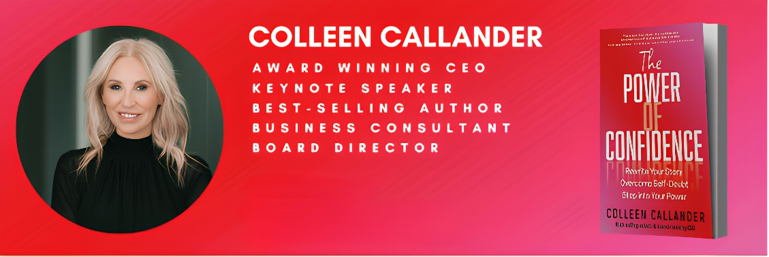
By The CEO Institute, in conversation with Colleen Callander; Board Director, Award-Winning Former CEO and Best-Selling Author
If every consequential decision climbs to the CEO, the business may appear disciplined. Look closer and a more troubling pattern can emerge. Executives have learned to seek permission. Judgement has been replaced by escalation, and the organisation moves at the speed of one person.
CEOs often read this hesitation as a capability problem. Sometimes the source sits much closer to the top.
During 13 years as CEO of Sportsgirl and Sussan, Colleen Callander saw a leader’s internal state become an external business condition. Now a board director, author and Victorian Syndicate Chair with The CEO Institute, she describes organisational confidence as the collective belief that “we know who we are, we know where we’re going, and we trust ourselves and each other to get there”.
That belief influences three things every CEO and board should care about: how quickly decisions move, how much truth reaches the top and how confidently authority spreads through the business.
Confidence is an operating condition
Organisational confidence can be seen in ordinary moments. A manager makes a call within their authority. An executive challenges an assumption. A team acknowledges a failed initiative, learns from it and tries again. People understand the strategy well enough to exercise judgement when the plan meets reality.
These behaviours develop through accumulated evidence. Employees notice whether delegated decisions are respected, whether difficult information is welcomed and whether a mistake leads to learning or blame. A statement about empowerment carries little weight when the first unpopular decision brings authority rushing back to the centre.
The CEO supplies much of that evidence. “The energy of the leader travels,” Colleen says. People watch how the CEO responds under pressure, whether their words and actions align and how often priorities change. When anxiety becomes reactivity, uncertainty spreads. When the leader remains present and clear, people have firmer ground from which to act.
When hesitation becomes the operating model
Self-doubt at the top rarely announces itself. It appears as another review, a delayed appointment, an extra approval gate or a decision repeatedly reopened. The CEO may become highly controlling because letting go feels risky. Soon, capable executives begin second-guessing themselves. Initiative declines because waiting has become the safest choice.
The commercial cost is easy to underestimate. Opportunities pass while decisions circulate. Senior leaders spend time managing upwards instead of leading outwards. Accountability blurs because authority was never truly transferred. Over time, the CEO becomes both the centre of the organisation and its constraint.
Healthy leadership confidence interrupts this pattern. Colleen calls it “self-belief without ego”. It allows a CEO to appoint people with deeper expertise, give them room to use it and ask, “I don’t know. What do you think?” The same leader can hear opposing views, make the call and move the organisation forward.
Confidence also allows a CEO to act without pretending certainty. Colleen’s language is practical: “We don’t have all the answers yet, but here’s what we do know. Here’s the decision we’re making today. Here’s what we’re watching, and here’s how we’ll respond if things change.” People can work with that because uncertainty has been given shape, direction and boundaries.
Truth has to survive the journey upwards
The most dangerous consequence of insecurity may be silence. If a CEO reacts defensively, dismisses contrary evidence or shoots the messenger, people quickly learn to edit what they say. Meetings remain orderly. Reports remain reassuring. The leadership team can look aligned while serious risks go undiscussed.
By the time the board sees the consequences, the original information may have been available for months. It simply became unsafe to deliver.
Curiosity provides an important safeguard. Colleen believes confidence becomes overconfidence when curiosity disappears. A leader who feels compelled to be right will gradually surround themselves with agreement. A secure leader invites challenge because stronger information improves the decision. Boards should pay close attention to which of those environments the CEO is creating, and whether executives can disagree openly while the stakes are still manageable.
CEOs need a place to process their own doubts. Trusted advisers and confidential peer forums allow a leader to test assumptions, expose fears and hear perspectives unavailable inside the business. The work done in those rooms helps the CEO return with greater clarity, without transferring the full weight of their anxiety to everyone else.
Action creates the evidence
One of the central ideas in Colleen’s latest book, The Power of Confidence, came from watching talented people wait to feel ready. They had experience, ideas and ability, yet remained quiet or declined opportunities because they could not fully back themselves.
Her conclusion is direct: action creates confidence. Each difficult conversation, delegated responsibility, uncomfortable question and calculated risk provides evidence that says, “I can do this.” Repetition changes the story a person carries about their own capability.
Colleen learned this personally when burnout seriously tested her confidence. She had placed enormous pressure on herself to carry everything, provide every answer and prove she could cope. The effort weakened her effectiveness and risked teaching others that leadership flowed through her alone.
Recovery changed the way she led. She established clearer boundaries, asked for help, trusted people whose strengths complemented her own and treated her health as part of her leadership responsibility. Her people needed a CEO who was present, clear and authentic. Perfection had become an obstacle to all three.
That lesson reaches beyond personal wellbeing. CEOs who hold too much can unintentionally make the business smaller around them. Every decision they retain is one less opportunity for another leader to build judgement. Every problem they personally rescue is one less chance for the organisation to develop resilience.
Confidence must outgrow the CEO
Enduring confidence requires clear strategy, understood decision rights and consistency when those rights are exercised. It grows when people speak honestly and remain respected, make a responsible call and receive support, acknowledge a mistake and help improve the system.
Over time, employees should be able to say: “I’m trusted. My voice matters. I know what is expected of me. And I have permission to act.” That shared experience turns confidence into organisational capability.
For boards, the questions are revealing. Does bad news reach us early? Can the executive team challenge the CEO? Are decisions made at the right level? Does the organisation keep moving when the CEO steps away? The answers expose whether confidence has been distributed or concentrated.
A CEO can begin with an equally direct question: where is my doubt shaping the behaviour of this business? Look for the delayed decision, the conversation being avoided, the authority repeatedly reclaimed or the challenge that has quietly disappeared.
Doubt will always visit leadership. It can be heard without receiving the final vote. If people wait for you, filter the truth for you and hesitate to act without you, the organisation’s confidence problem may begin with you.
Colleen Callander’s latest book, The Power of Confidence: Rewrite Your Story. Overcome Self-Doubt. Step into Your Power, explores how confidence can be deliberately developed through self-awareness, action and everyday habits. Combining leadership insights with a practical 30-day transformation, it offers readers a structured path to strengthen self-belief, build resilience and lead with greater clarity and courage.
To purchase a copy, click here
.png)
Australia is not short of demand. It is short of the productive capacity needed to meet that demand without creating higher prices.
Australia is not short of demand. It is short of the productive capacity needed to meet that demand without creating higher prices.
.png)
Australia is not short of demand. It is short of the productive capacity needed to meet that demand without creating higher prices.